Would you like to switch to the accessible version of this site?

Go to accessible site Close modal window

Don't need the accessible version of this site?

Hide the accessibility button Close modal window
Accessibility View Close toolbar
  • Home
  • New Patient Center
    • Online Forms
    • What To Expect
    • Virtual Office Tour
    • Veterinary Resources
    • Payment Options
  • Petsimonials
  • Pet Memorials
  • About Us
    • Services
    • Meet Our Team
  • Clinic Hours
  • Contact Us
  • Anesthesia Free Teeth Cleaning
  • Veterinary Topics
    • Pet Health
      • Chronic Conditions
      • Digestive and Oral Health
      • Diseases and Viruses
      • Pests and Parasites
      • Orthopedics
    • Today's Veterinarian
    • Choosing Your Pet
      • Finding Your Pet
      • Cats
      • Dogs
      • Exotics
        • Amphibians
        • Birds
        • Reptiles
          • Lizards
          • Turtles
      • Small Mammals
        • Ferrets
        • Rabbits
        • Domesticated Animals
          • Prairie Dogs
        • Pocket Pets
          • Chinchillas
          • Guinea Pigs
          • Hamsters
          • Hedgehogs
          • Rats
      • Livestock
        • Cows
        • Donkeys, Horses & Mules
        • Goats
        • Pigs
        • Poultry
        • Sheep
    • Living With Your Pet
      • Bringing Your Pet Home
      • Children and Pets
      • Providing Care
      • Travel
      • Saying Goodbye
    • Newsletter Library
      • Cats
      • Tips for Pet Owners
      • Behavior & Training
      • Fleas & Parasites
      • Keeping Pets Healthy
      • Recognizing Illness
      • Nutrition & Food
      • Pet Dangers
      • Seasonal Topics
      • Visiting the Vet
      • Equine
      • Newsletter Archive
        • Fun with Pets
        • Unbelievable Pets
    • Video Newsroom
      • Health Topics
      • Technology and Science
      • Other Interests
    • Newsletter Library
    • Client Survey
    • Pets4Kids
.

(805) 496-1122

Menu

(805) 496-1122

DOGS AND CATS ARE WELCOME

Call us at (805) 496-1122 to schedule an appointment

Error!

    • Home >
    • Articles >
    • Choosing Your Pet >
    • Livestock >
    • Donkeys, Horses & Mules

    Donkeys, Horses & Mules

    • Created in Choosing Your Pet, Livestock, Choosing Your Pet, Livestock, Donkeys, Horses & Mules

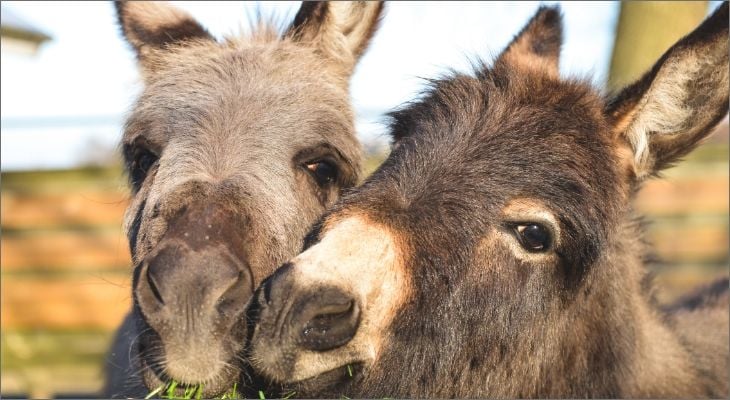
    donkey and mule

    There are many benefits to owning a donkey, horse, or mule. However, it is important to know that these animals (all belonging to the sub-family called equus) require special housing, feeding, and care for a healthy life. Here are a few important considerations to make before bringing a new animal home.

    Housing and Sheltering

    The size of the animal determines how large of a stall you’ll need to keep it in. For one normal-sized animal, you’ll want something around 12-foot by 12-foot square or larger. Ponies and some miniature horses can be kept in areas as small as 10-foot by 10-foot. And draft horses or other large breeds require up to 16-foot by 16-foot stalls.

    You’ll also need some sort of shelter from the elements. This can be a simple three-sided shed with a cover or a stall that is both indoors and outdoors. If you plan on keeping your horse, donkey, or mule in a pasture, make sure they still have some sort of cover from the rain and summer sunshine.

    Feeding

    In general, most donkeys, horses, or mules eat about twenty pounds of food a day. They also need access to around eight gallons of water. If you’re keeping your horse in a barn, you’ll want to provide them with a clean water trough or automatic water source. Those in a pasture should have access to a much larger trough or tank, due to potential evaporation. Plus, they’ll need plenty of hay and pellets or grain twice a day.

    Other Tips to Know About Owning a Horse, Donkey, or Mule

    Besides basic food, water, and shelter, these animals have numerous other care requirements. Their hooves grow quickly, so you’ll need to have a local farrier come out and trim or shoe them every six to eight weeks.

    Horses, donkeys, and mules also need annual or bi-annual veterinary care and regular vaccinations. Additionally, they need to be protected against parasites and other worms that can cause significant health conditions.

    Finally, your new donkey, horse, or mule needs exercise on a regular basis. You won’t always be available for rides, so having a place to roam like a pasture or paddock is important. Groundwork or the so-called act of putting them through their paces through physical activity should be done at least a couple times per week.

    Wrap Up: Basic Care

    Owning one or all of these animals is exciting. However, you want to ensure you’re giving them the healthiest and happiest lifestyle by keeping these important tips in mind.

    • Pet Health
      • Chronic Conditions
      • Digestive and Oral Health
      • Diseases and Viruses
      • Pests and Parasites
      • Orthopedics
    • Today's Veterinarian
    • Choosing Your Pet
      • Finding Your Pet
      • Cats
      • Dogs
      • Exotics
        • Amphibians
        • Birds
        • Reptiles
          • Lizards
          • Turtles
      • Small Mammals
        • Ferrets
        • Rabbits
        • Domesticated Animals
          • Prairie Dogs
        • Pocket Pets
          • Chinchillas
          • Guinea Pigs
          • Hamsters
          • Hedgehogs
          • Rats
      • Livestock
        • Cows
        • Donkeys, Horses & Mules
        • Goats
        • Pigs
        • Poultry
        • Sheep
    • Living With Your Pet
      • Bringing Your Pet Home
      • Children and Pets
      • Providing Care
      • Travel
      • Saying Goodbye
    • Newsletter Library
      • Cats
      • Tips for Pet Owners
      • Behavior & Training
      • Fleas & Parasites
      • Keeping Pets Healthy
      • Recognizing Illness
      • Nutrition & Food
      • Pet Dangers
      • Seasonal Topics
      • Visiting the Vet
      • Equine
      • Newsletter Archive
        • Fun with Pets
        • Unbelievable Pets
    • Video Newsroom
      • Health Topics
      • Technology and Science
      • Other Interests
    • Newsletter Library
    • Client Survey
    • Pets4Kids

    Our Regular Schedule

    Primary Office

    Monday:

    8:00 am-12:30 pm

    2:00 pm-5:00 pm

    Tuesday:

    8:00 am-12:30 pm

    2:00 pm-5:00 pm

    Wednesday:

    8:00 am-12:30 pm

    2:00 pm-5:00 pm

    Thursday:

    8:00 am-12:30 pm

    2:00 pm-5:00 pm

    Friday:

    8:00 am-12:30 pm

    2:00 pm-5:00 pm

    Saturday:

    9:00 am-12:00 pm

    Sunday:

    Closed

    Location

    Find us on the map

    • Copyright © 2026 MH Sub I, LLC dba iMatrix.
    • Admin Log In
    • Site Map